
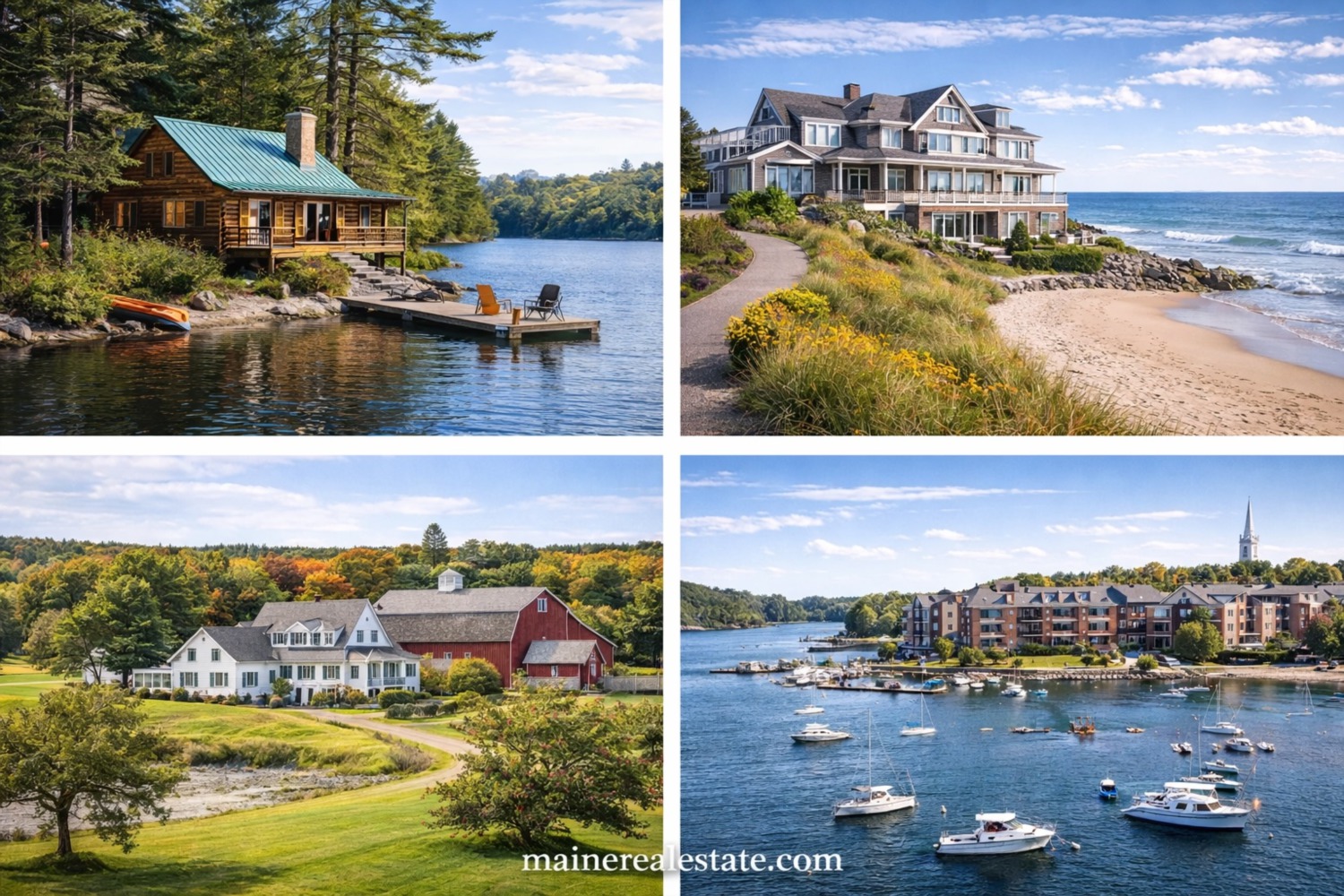
Maine’s real estate market offers far more variety than many buyers initially realize. Beyond the classic New England colonial that comes to mind when people imagine a Maine home, the state’s market includes oceanfront estates, lakeside cabins, downtown condominiums, multi-family investment properties, buildable land, and working farms. Each property type comes with its own set of considerations, costs, and opportunities.
Understanding what’s available, and what each type demands of its owner, helps you focus your search on properties that genuinely match your lifestyle, budget, and long-term goals. This guide walks through the major property types you’ll encounter in Maine and what you need to know about each.
Single-Family Homes
Single-family homes represent the vast majority of residential sales in Maine. The state’s housing stock spans centuries, from pre-Revolutionary homes in coastal towns to contemporary builds in growing communities like Standish and Scarborough.
The most common architectural styles you’ll encounter include New England Colonials (two-story, symmetrical, center-entry homes found throughout the state), Cape Cod style (one-and-a-half story homes, often with dormered second floors, extremely common in Maine), farmhouse style (ranging from historic connected farmsteads to modern farmhouse-inspired builds), and ranch-style homes (single-story homes popular from the 1950s through 1970s, offering accessibility and straightforward layouts).
Pricing spans the full range of Maine’s market. Single-family homes in Cumberland County carry a $565,000 median, while those in Aroostook County median at $180,000. The statewide median for single-family existing homes was $389,000 in January 2026.
What to know before buying. Maine single-family homes come with systems that may be unfamiliar to buyers from urban areas. Many rural properties rely on private wells for water and septic systems for waste rather than municipal services. Heating systems vary widely: oil heat remains common, particularly in older homes, while heat pumps are increasingly popular in newer construction and renovations. Property taxes, heating costs, and maintenance responsibilities are entirely yours. Budget accordingly.
Condominiums and Townhomes
Condominiums are primarily concentrated in Portland, South Portland, and other larger Maine communities. They offer an entry point for buyers who want to own rather than rent but aren’t ready for (or don’t want) the full responsibility of a single-family home.
Portland condos typically range from $250,000 to $450,000, with higher-end waterfront and new construction units exceeding that range. Condos in Portland‘s Old Port, Munjoy Hill, and East End neighborhoods are particularly sought after for their walkability and character.
Outside of Portland, condo availability is more limited. South Portland, Scarborough, Brunswick, and Bangor have condo developments, but the selection is significantly narrower than in larger metro areas. Some coastal communities have seasonal condo complexes that can serve as year-round housing.
What to know before buying. Condo ownership means shared expenses through HOA (homeowner association) fees. These typically cover exterior maintenance, common areas, insurance on the building, and sometimes heat and water. Monthly HOA fees in Maine generally range from $200 to $600 depending on the building’s amenities and age. Before purchasing, review the HOA’s financial health, reserve fund balance, meeting minutes, and any planned special assessments. A building with deferred maintenance and a thin reserve fund can result in unexpected costs. Also verify any rental restrictions if you might want to rent the unit in the future.
Waterfront Properties
Waterfront real estate is central to Maine’s identity and market. The state has approximately 3,500 miles of coastline and more than 5,785 lakes, creating an enormous range of waterfront options. As of early 2026, over 1,800 waterfront homes are listed for sale across Maine.
Oceanfront properties carry the highest premiums. Southern coast oceanfront homes regularly exceed $1 million, while Downeast and northern coastal properties may start in the $400,000-$600,000 range. Ocean access (close proximity to water but not directly on it) is more affordable and still highly desirable.
Lakefront properties range widely based on lake size, location, and the home itself. Homes on larger, well-known lakes like Sebago, Rangeley, and Moosehead can command $400,000 to $800,000+. Smaller lakes and ponds in central and northern Maine offer lakefront living in the $200,000-$400,000 range, sometimes lower.
Riverfront properties are generally the most affordable waterfront option. Communities along the Kennebec, Penobscot, and Androscoggin rivers offer water access at prices often comparable to non-waterfront homes in the same area.
What to know before buying. Maine’s Shoreland Zoning Act restricts development and modifications within 250 feet of the normal high-water mark of coastal wetlands, rivers, and significant lakes. This means you may face limitations on what you can build, add, or modify on a waterfront property. Flood insurance may be required. Erosion, water level fluctuations, and marine exposure create maintenance demands that inland properties don’t face. Dock permits, mooring rights, and water access specifics should be confirmed before purchase. A real estate agent with waterfront expertise is particularly valuable for these transactions.
Multi-Family Properties
Multi-family properties (duplexes, triplexes, and small apartment buildings) offer both housing and investment potential. Maine’s housing shortage has intensified demand for rental units, making multi-family properties attractive to owner-occupants who want rental income and to investors seeking cash flow.
Portland, Lewiston, Bangor, and Biddeford have the most active multi-family markets. In Lewiston and Bangor, multi-family properties can still be found at prices that make financial sense for owner-occupants. Portland multi-family properties command premium prices but also generate strong rental income.
Maine’s recent zoning reforms under LD 2003 have expanded where duplexes and small multi-family units can be built, potentially increasing supply in coming years. Towns like Rockland, Biddeford, and Portland are leading in implementing these changes.
What to know before buying. Multi-family purchases require different financial analysis than single-family homes. Evaluate gross rent potential, vacancy rates, operating expenses, and net operating income. FHA loans allow buyers to purchase up to four-unit properties with as little as 3.5% down if they live in one of the units, making this an accessible strategy for first-time buyers. Understand Maine’s landlord-tenant laws, lead paint requirements (common in older Maine multi-family stock), and local rental licensing requirements.
Vacant Land
For buyers who want to build rather than buy existing, Maine has abundant vacant land available. Buildable lots range from quarter-acre parcels in established neighborhoods to multi-hundred-acre woodland tracts.
Pricing varies enormously by location. A buildable lot with utilities in a desirable southern Maine town might cost $100,000 to $300,000 or more. Acreage in central and northern Maine can be found for $20,000 to $80,000 or even less in remote areas. Waterfront lots command premiums aligned with the waterfront market.
What to know before buying. Building on vacant land in Maine requires navigating several specific considerations. Zoning regulations dictate what you can build, how large, and how close to property lines and water. If the property lacks municipal water and sewer, you’ll need to confirm that the soil can support a septic system (a soil evaluation or “perc test” determines this) and that a well can provide adequate water. Road access and utility availability should be confirmed. Shoreland Zoning restrictions apply near any water body. Construction costs in Maine have risen substantially, with MaineHousing reporting that per-unit development costs have more than doubled since 2019. Get construction estimates before committing to a land purchase.
Historic and Antique Homes
Maine has one of the oldest housing stocks in the nation, and historic homes are part of the state’s character. From Federal-period mansions in towns like Castine and Wiscasset to connected Cape Cod farmsteads throughout rural Maine, these properties offer architectural beauty and craftsmanship that modern construction rarely matches.
Many of Maine’s most characterful communities, including Bath, Belfast, Damariscotta, Camden, and Brunswick, feature significant inventories of well-preserved historic homes. Prices range from under $200,000 for properties needing work in smaller towns to well over $500,000 for fully restored homes in desirable locations.
What to know before buying. Older homes require specific inspection expertise. Foundations may be stone or early concrete that has shifted or deteriorated. Electrical systems may need updating. Plumbing may include galvanized or even lead pipes. Insulation is often minimal by modern standards, which directly impacts heating costs. Lead paint is present in virtually all pre-1978 homes and must be managed according to Maine and federal regulations, particularly if children will be present.
That said, a well-maintained historic home can be an excellent investment. Many buyers find that the character, craftsmanship, and location of historic properties outweigh the maintenance considerations. The key is understanding what you’re buying through thorough inspection and realistic budgeting for updates.
New Construction
New construction in Maine has increased but still lags behind demand. The state needs an estimated 84,000 new homes by 2030. New builds are most common in growing communities like Standish, Scarborough, Westbrook, and in developments around Bangor and Auburn.
New construction typically starts in the $350,000 to $500,000 range for a standard single-family home in southern Maine, with prices higher for custom builds and premium locations. Construction costs have risen significantly, with per-unit costs more than doubling since 2019 according to MaineHousing data.
What to know before buying. New construction offers modern systems, energy efficiency, and reduced near-term maintenance. Heat pump systems, modern insulation, and energy-efficient windows are standard in most new Maine homes, resulting in meaningfully lower heating costs than older housing stock. If building custom, understand that timelines in Maine are often longer than quoted and budget overruns are common in the current construction cost environment. If buying in a new development, research the builder’s reputation and inspect the property independently before closing.
Seasonal and Vacation Properties
Maine’s seasonal property market is substantial, driven by the state’s appeal as a vacation and second-home destination. Coastal cottages, lakeside camps, and mountain retreats serve buyers seeking seasonal use, vacation rental income, or eventual retirement homes.
“Camps” (Maine’s term for seasonal cabins, often on lakes or in the woods) range from rustic structures at $100,000-$200,000 to fully modernized lakefront homes at $400,000+. Many are three-season properties not designed for year-round use, which limits their utility but reduces their price.
Vacation rental potential is strong in tourist-heavy areas like Bar Harbor, Kennebunkport, Camden, and the lakes region. Some properties generate significant rental income during peak season (July-October), though local short-term rental regulations vary by municipality and are evolving.
What to know before buying. Seasonal properties may lack winterization, insulation, or heating systems adequate for year-round use. Converting a three-season camp to year-round occupancy can involve significant expense (insulation, heating, plumbing protection, foundation work). If purchasing for rental income, verify local short-term rental regulations, as several Maine communities have implemented restrictions. Financing for seasonal properties may require larger down payments than primary residences. Insurance for seasonal homes, particularly waterfront, typically costs more than standard homeowner policies.
Frequently Asked Questions
What types of homes are most common in Maine?
Single-family homes are by far the most common, ranging from historic New England colonials and Cape Cod-style homes to modern construction. Condominiums are available primarily in Portland and larger towns. Multi-family properties, waterfront homes, and vacant land round out the market.
How much does waterfront property cost in Maine?
Waterfront prices vary enormously. Oceanfront homes on the southern coast can exceed $1 million, while lakefront properties in central and northern Maine may start in the $200,000-$400,000 range. Riverfront properties and homes on smaller ponds tend to be more affordable. Over 1,800 waterfront homes are currently listed statewide.
Can I buy land and build in Maine?
Yes. Vacant land is widely available at a range of price points. Southern Maine lots may cost $100,000-$300,000+, while acreage in northern Maine can be found for under $50,000. Understand zoning regulations, Shoreland Zoning requirements for properties near water, and septic and well requirements for properties without municipal services.
What should I know about buying an old house in Maine?
Maine has a large inventory of historic homes, many dating to the 1800s. These offer character and craftsmanship but may need attention to foundations, electrical, plumbing, insulation, and heating. A thorough inspection by an inspector experienced with older construction is essential. Well-maintained historic homes can be excellent investments.
Are condos a good option for first-time buyers in Maine?
Condominiums can be an excellent entry point, particularly in Portland where single-family prices are highest. Portland condos typically range from $250,000 to $450,000 with lower maintenance responsibilities. Review HOA fees, reserve funds, building condition, and any rental restrictions before purchasing.